Structural Pipe Welding and Metal Fabrication in Bremerton: What Projects We Handle and How the Process Works
Structural Pipe Welding and Metal Fabrication in Bremerton: What Projects We Handle and How the Process Works
Most industrial and commercial projects in Bremerton require both structural welding and pipe welding — and splitting that scope between two separate subs creates a coordination problem that slows submittals, complicates inspection packages, and introduces fit-up risk at the seam where structural supports meet process piping. Kitsap County's mix of naval facility infrastructure, marine support operations, and industrial construction means this combined scope comes up constantly. Understanding how the two services differ — and how they run together from shop to field — helps you plan your project and your subcontractor list more efficiently.
What Is the Difference Between Pipe Welding and Structural Welding?
Structural welding joins steel members like beams, columns, and frames; pipe welding joins pipe sections that carry fluids, gases, steam, or process media — and each is governed by a different code body with different inspection requirements.
Structural work follows AWS D1.1, and in Washington State, permitted building projects require WABO-certified special inspection for structural welds. Pipe welding is governed by ASME B31.1 for power piping and B31.3 for process piping. Those codes require qualified welding procedure specifications (WPS) and procedure qualification records (PQR) — documentation that proves the weld procedure and the welder are qualified to the applicable standard.
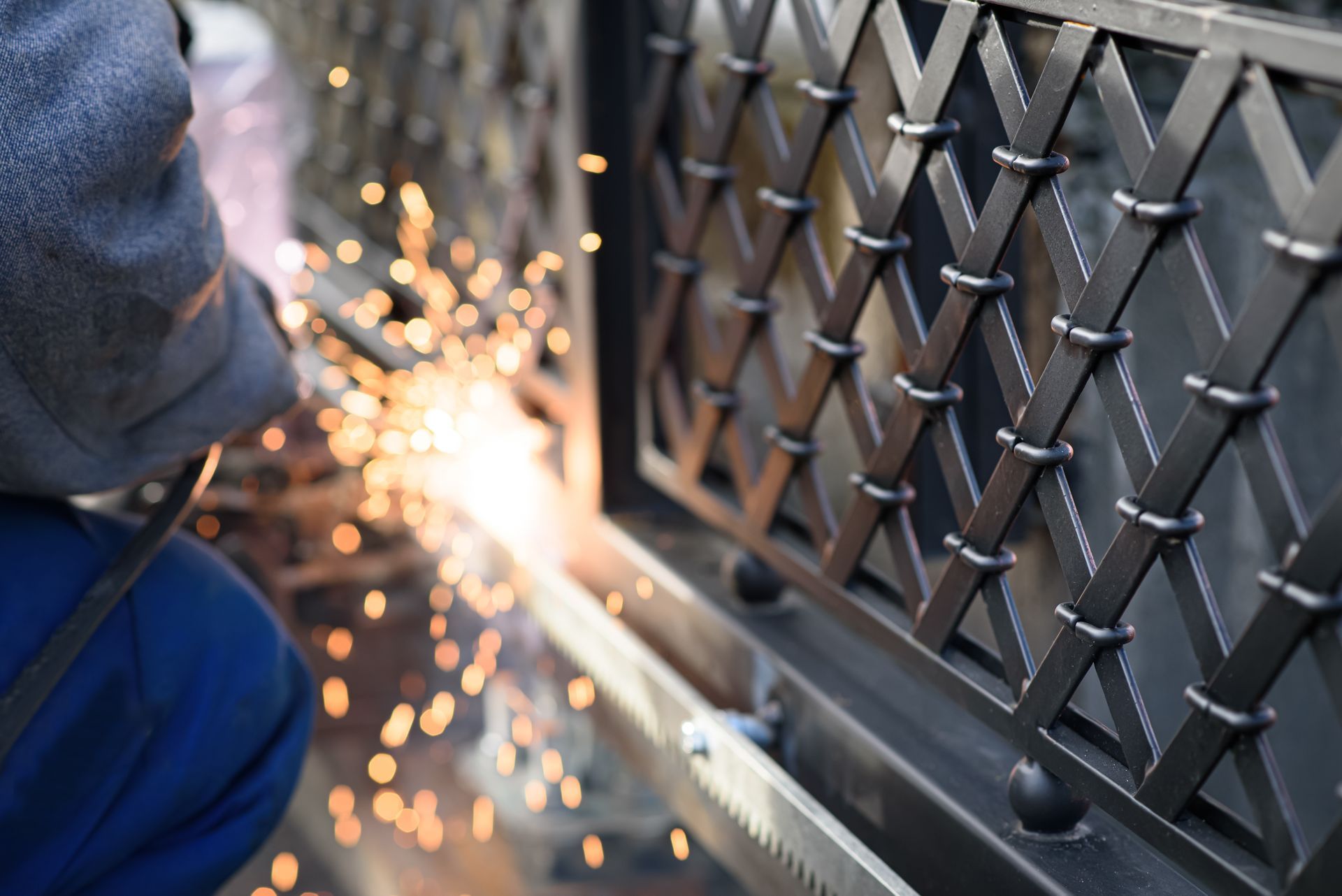
The weld geometry itself is different too. Structural welds are typically linear — fillet or groove welds along a flat or angled joint. Pipe welds are circumferential, wrapping around the full diameter of the pipe in a 3D profile. That geometry demands specific technique and, on code-required systems, non-destructive testing (NDT) to verify the weld root and crown.
In practice, most industrial projects involve both. A structural steel pipe rack carries process piping. An equipment pad supports a pump with flanged connections. Having one contractor certified for both means one submittal package, one set of certs, and one point of contact for the inspector — instead of two subs whose work has to be coordinated at every interface.
What Project Types Fall Under This Scope?
Industrial and government facilities in Bremerton and across Kitsap County regularly need process piping systems, custom steel structures, and field repair work — often within the same project.
Industrial piping systems are the core application. Process piping for manufacturing, utilities, and marine or shipyard support facilities requires ASME-qualified welders and procedures. Given the presence of PSNS and naval support infrastructure in Kitsap County, process piping work in government and industrial facilities is a consistent project type in this region. You can see how that work fits into the broader scope of government and facility work in Bremerton.
Steel frameworks and structural supports — equipment pads, pipe racks, mezzanines, access platforms — are fabricated and installed as part of the same project scope. These structures need AWS D1.1 qualified welding and, where required by permit, WABO-certified inspection.
Custom shop-fabricated parts — brackets, flanges, spool sections, transition fittings — are built to drawing spec in a controlled shop environment before they ever arrive on site. Metal repair and modification work rounds out the scope: field repair of existing piping or structural members, and retrofit modifications to operating facilities that can't be shut down for extended periods.
Understanding the Shop-to-Field Workflow
A well-run fabrication project moves through a defined sequence, and knowing where shop work ends and field work begins helps you sequence your project correctly.
It starts with drawing and scope review. Welding procedures are selected to match code requirements, welder qualifications are confirmed, and the fabrication plan is set before any material is cut. For shop fabrication and mobile welding repair, this planning step determines what gets built in the shop versus what gets welded in the field.
Shop fabrication happens in a controlled environment — no weather exposure, stable fixturing, easier NDT access. Pipe spools (pre-assembled pipe sections with fittings and flanges) are built in the shop to minimize the number of field welds required. This is where quality control is highest and rework is cheapest.
Field installation follows. Shop-built assemblies are delivered to site, structural members are set, and field welds connect spool sections, attach structural components, and complete the system. Field welding is necessary where existing structure dictates fit-up, where large assemblies can't be moved, or where modifications are made to in-place systems.
Inspection and documentation close the sequence. Weld records, procedure qualifications, and certifications are compiled into a package for the GC and owner — what gets handed to the special inspector or the owner's QC representative.
Do Certifications Like ASME, AWS, and WABO Apply to Your Project?
Yes — and which certifications apply depends on the system type and whether the project is permitted for structural work in Washington State.
ASME Section IX governs welder and procedure qualification for process and power piping. If the pipe system is a code-required installation, the contractor must hold qualified WPS and PQR documentation — not just claim ASME experience. AWS D1.1 covers structural steel welding. WABO certification is required for special inspection of structural welds on permitted building projects in Washington State — your inspector will ask for it.
For GCs assembling a submittal package, a contractor qualified under all three standards simplifies the entire process. One cert package, one WPS submission, one contact for RFIs related to welding scope. Learn more about what those qualifications look like in practice on the page for certified structural and pipe welding.
Kitsap County Seasonal Timing: Why Fall Is the Right Window
Scheduling shop fabrication in October and November positions field installation to proceed efficiently through Bremerton's cold, wet winter months — because the most weather-sensitive work is already done.
Shop fabrication is weather-independent. Pipe spool assembly, structural component fabrication, and custom part production all happen indoors under consistent conditions. Getting that work completed in the fall means your field crew is installing known, inspected assemblies rather than doing cold-weather fit-up from scratch. Field welding in wet conditions requires preheat, protection from wind and moisture, and slower progression — all of which add cost when shop work hasn't been front-loaded.
Engaging a combined shop-and-field contractor in the fall also locks in crew continuity. The same crew that built the spools and structural components understands the assembly tolerances and fit-up logic — which reduces field troubleshooting and keeps the installation moving when weather windows are short.
Using a single contractor for the full scope — from fabrication through field installation — removes the coordination gap that typically slows projects at the handoff between two separate subs.
Schedule a scope review with JC/GC Welding & Mechanical to confirm certifications, discuss your project timeline, and get your fabrication work on the calendar before winter field conditions tighten the schedule.